The recent terror attacks in Israel highlight an important Biblical emphasis: what will you trust when terror comes? The story is found in Matthew 2:13-18 and it provides timeless reminders that are relevant for what is happening in the news today.
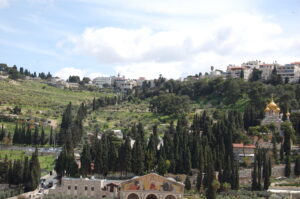
Photo by Gordon Dickson, March 2023
In the Christmas story, the wise men traveled to Jerusalem and Bethlehem. And their arrival caused an uproar. Why? What is it that we are supposed to learn from this passage? This story reveals God’s truth as well as mankind’s tragic terror. Even though this passage speaks of horror, it also speaks of hope. Here the God of hope reveals that He rules in the affairs of men and reveals His truth. In a world of wickedness, we can trust His Word.
Horror: The Tragedy at Bethlehem, 16-18
The anger of heartless Herod
“When Herod the king had heard these things, he was troubled, and all Jerusalem with him” (2:3). What did Herod hear? He heard that the wise men were looking for “The King of the Jews.” Herod was the ruling dictator and it angered him to hear that someone else was “The King of the Jews.” Even though Herod instructed them otherwise, the wise men obeyed God and avoided Herod. And this made the king even more angry (2:16).
The massacre of the young children near Bethlehem
So, Herod, ruling in Jerusalem, ordered the massacre of the young children in Bethlehem, 5 miles away. From our understanding about the size of Bethlehem at the time, this may have included as many as twenty children. Like the first murderer, Cain, Herod spilled innocent blood. How can there be any real hope in this story of Herod’s heartless actions?
Hope: God’s Sovereign Control and Revelation
The Hope of the God-given Savior
“Jesus was born in Bethlehem” (2:1). The name “Jesus” means “Savior” for “He shall save His people from their sins.” (Matthew 1:21). By His atoning work, we have the grace to repent of sin with all its terrors and trust the Lord.
Hope: God’s Prophecies were being fulfilled
The wise men knew enough to watch for the star out of Jacob They could have known this from the Old Testament Scriptures, (such as Numbers 24:17). Those Scriptures had been verified among all the surrounding nations during the captivity in Babylon (through Daniel and others). When Herod asked the religious leaders where Christ would be born, they told him, quoting Micah 5:2. Even those lost people recognized that God faithfully fulfilled His prophecies. Matthew 2:15, 17-18 verified that God’s prophecies were being fulfilled. Today, 2 Peter 1:19 reminds us, that we can place even greater confidence in God’s Word: “We have also a more sure word of prophecy; whereunto ye do well that ye take heed, as unto a light that shineth in a dark place, until the day dawn, and the day star arise in your hearts.” We can trust God’s Word even more than they could trust the experience of receiving God’s revelation in the first place!
Hope: God was still guiding His faithful people through the clear revelation of His truth.
In a dream, God warned the wise men to avoid Herod (2:12). The angel of the Lord also warned Joseph in a dream (2:13). And the angel confirmed to Joseph that he would tell him when to return. God gave His people truth to protect and preserve them. Though God’s revelation riled rebels such as Herod, God’s faithful truth gave His people hope. Today, we have God’s Word in our hands and hearts. We should pay close attention when He brings His words to our minds.
Hope: God gave us human examples so that we might see how God works through faithful, obedient people.
The wise men obeyed God immediately. Joseph obeyed God moments after he awakened from his God-given dream. This is a testimony to us, even today.
Hope: God providentially protected His Messiah in order to accomplish His mission.
TRANSLATIONS
Spanish translation of this message: Belén: triunfo y tragedia
French translation of this message: Bethléem : triomphe et tragédie
Haitian Creole translation of this message: Betleyèm: triyonf ak trajedi